The Hidden IT Risk That Could Derail Your Financial Firm: How to Stay Secure, Compliant, and Operational in a Data-Driven Industry
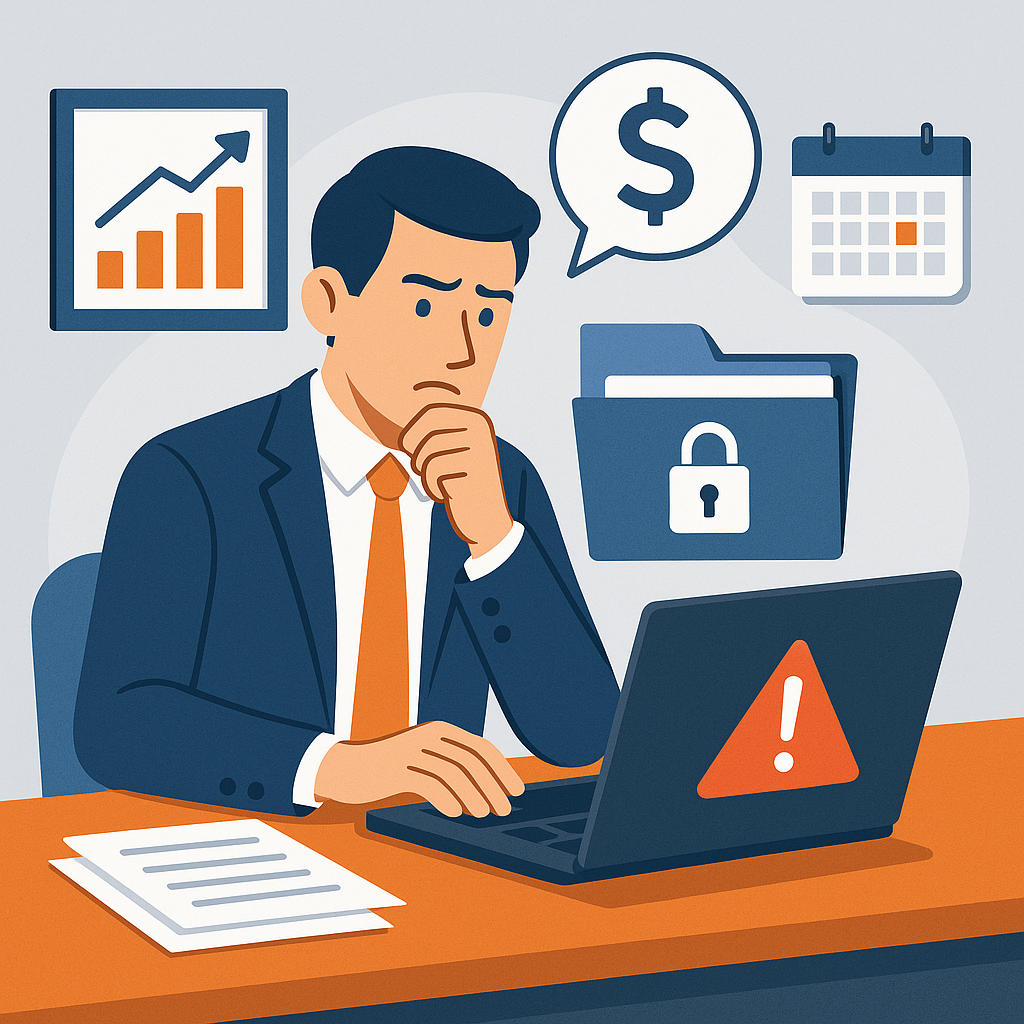
The Hidden IT Risk That Could Derail Your Financial Firm: How to Stay Secure, Compliant, and Operational in a Data-Driven Industry
In financial services and accounting, data is currency—and when your technology isn’t secure, stable, and compliant, your entire business is at risk. Whether you’re a CPA firm, investment advisor, or bookkeeper, your clients rely on you to protect their most sensitive information. Yet many firms operate with outdated systems, weak cybersecurity, or minimal IT oversight.
If your technology isn’t properly managed, you’re not just risking downtime. You’re risking fines, lawsuits, lost trust, and regulatory violations.
In this article, we’ll explore the top IT pain point in financial services, what’s at stake if it’s not resolved, what steps you can take, and how KairosMSP can help you stay one step ahead.
The Core Pain Point: Overloaded, Undersupported, and Overexposed
Many financial professionals run on outdated or fragmented IT systems. Maybe your team still emails spreadsheets or logs into QuickBooks over a shared password. Maybe your backups haven’t been tested in months. Maybe you’re trusting a local IT contractor who “checks in every now and then.”
That model doesn’t cut it anymore—especially when cyberattacks on financial firms have increased by over 300% in recent years.
Common Pain Points:
- Lack of proactive cybersecurity or real-time monitoring
- Unsecured file sharing and email communications
- Weak password policies or lack of MFA (multi-factor authentication)
- No tested backup or disaster recovery plan
- Poor compliance with regulations (e.g. GLBA, FINRA, SEC, IRS Pub. 4557)
- Downtime during tax season, audits, or client deadlines
These pain points create serious exposure—financial, legal, and reputational.
Why It Matters: Regulatory Compliance and Trust Are Non-Negotiable
Clients trust you with their Social Security numbers, investment portfolios, tax returns, and business financials. Regulators trust you to maintain strict data protections. One misstep can cost you everything.
Consequences of Poor IT Practices:
- Fines or disciplinary action under IRS, FINRA, or state laws
- Loss of client data due to malware or ransomware
- Missed tax or audit deadlines due to system downtime
- Reputational damage that drives clients to competitors
- Legal action from clients for negligent data handling
In financial services, your tech infrastructure isn’t just background support—it’s the foundation of your professional credibility.
What You Risk by Doing Nothing
When financial firms delay investing in IT infrastructure, the cost of doing nothing multiplies over time. Hackers don’t care how big you are—just how vulnerable you are. And regulators won’t care that you were “too busy during tax season” to implement cybersecurity best practices.
If you do nothing, here’s what could happen:
- Your accounting system is locked by ransomware three days before the filing deadline.
- A phishing email leads to a data breach—and your client’s entire tax return gets exposed.
- You fail a compliance audit because you lack documented security policies or access logs.
- Clients start asking questions you can’t answer: “Is our data encrypted? Who has access to my portfolio?”
Now you’re not just playing catch-up—you’re paying for recovery, dealing with regulators, and watching clients walk out the door.
Action Steps: What Financial Professionals Must Do Now
1. Conduct an IT and Cybersecurity Risk Assessment
Understand your vulnerabilities across endpoints, servers, cloud apps, and data flows. Prioritize remediation and document everything for compliance purposes.
2. Implement Strong Access Controls and MFA
Every user should have a unique login. Admin accounts should have multi-factor authentication. Shared passwords should be banned.
3. Encrypt Client Data (At Rest and In Transit)
Whether you’re sending tax docs or storing investment files, they must be encrypted—especially over email or cloud tools.
4. Automate Secure Backups with Version History
Backups should be done daily, stored offsite (or in the cloud), and tested regularly. Bonus points for versioning so you can recover from ransomware.
5. Create a Formal IT Policy for Regulatory Readiness
You need documented policies for data retention, access controls, incident response, and vendor management.
How KairosMSP Empowers Financial Professionals to Operate with Confidence
At KairosMSP, we understand the unique risks and responsibilities faced by financial and accounting firms. Our managed IT services aren’t just about convenience—they’re built for security, compliance, and uptime.
Here’s what we provide for financial services clients:
- 24/7 Network and Endpoint Monitoring to stop breaches before they start
- Encrypted Email and Secure File Sharing for safe document transfers
- Proactive Patch Management & System Updates to close vulnerabilities
- Secure Cloud or On-Premise Backups with disaster recovery testing
- IT Policy Development & Audit Readiness Support
We help you serve your clients with confidence, knowing your systems are secured, your data is protected, and your tech won’t let you down during peak season.
Your Next Step: Get Ahead of Risk Before It Gets Ahead of You
Don’t wait for a ransomware attack, audit failure, or client complaint to upgrade your IT. With KairosMSP, you get proactive protection, ongoing support, and a team that understands the stakes in your industry.
Schedule your free financial services IT assessment today and let’s close the gaps before they become liabilities.
KairosMSP – Right Technology. Right Time. Right People.