The Hidden IT Risk That Could Derail Your Financial Firm: How to Stay Secure, Compliant, and Operational in a Data-Driven Industry
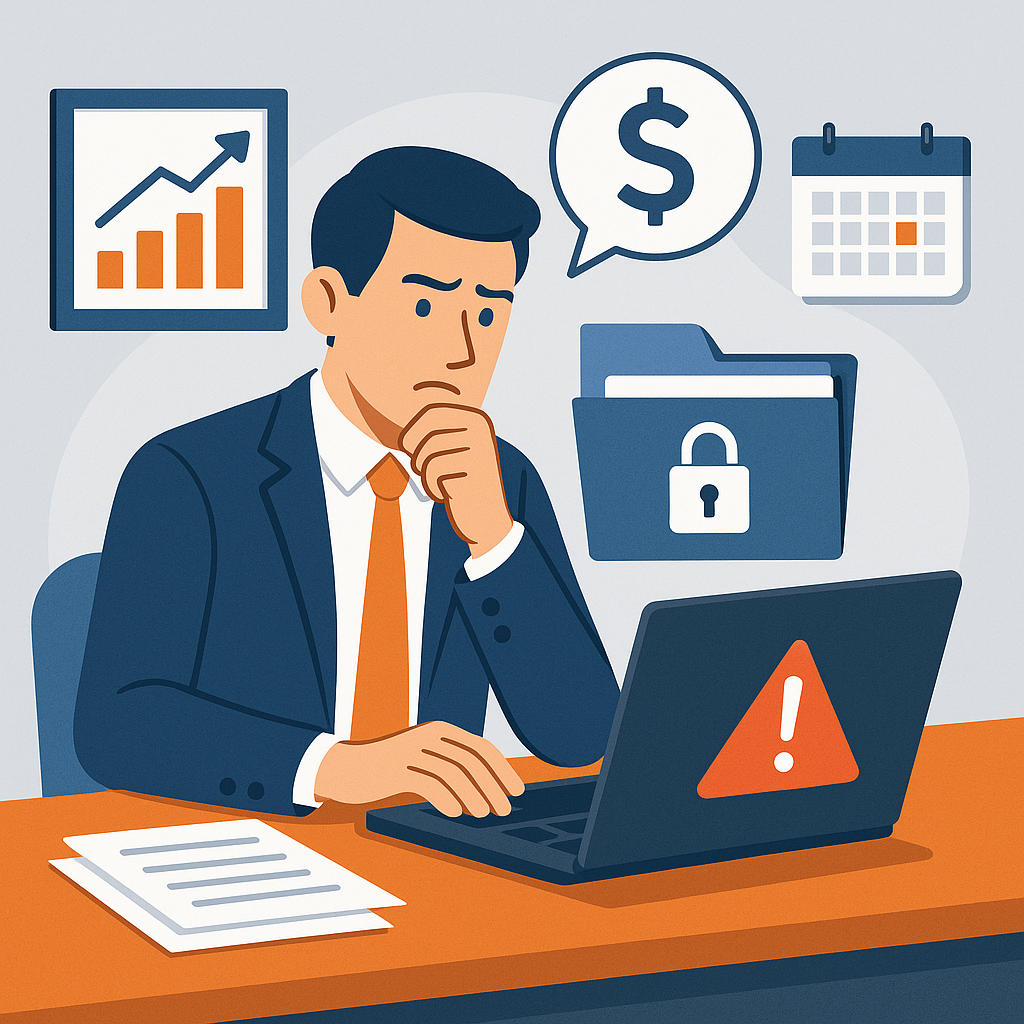
The Hidden IT Risk That Could Derail Your Financial Firm: How to Stay Secure, Compliant, and Operational in a Data-Driven Industry
In financial services and accounting, data is currency—and when your technology isn’t secure, stable, and compliant, your entire business is at risk. Whether you’re a CPA firm, investment advisor, or bookkeeper, your clients rely on you to protect their most sensitive information. Yet many firms operate with outdated systems, weak cybersecurity, or minimal IT oversight.
If your technology isn’t properly managed, you’re not just risking downtime. You’re risking fines, lawsuits, lost trust, and regulatory violations.
In this article, we’ll explore the top IT pain point in financial services, what’s at stake if it’s not resolved, what steps you can take, and how KairosMSP can help you stay one step ahead.
The Core Pain Point: Overloaded, Undersupported, and Overexposed
Many financial professionals run on outdated or fragmented IT systems. Maybe your team still emails spreadsheets or logs into QuickBooks over a shared password. Maybe your backups haven’t been tested in months. Maybe you’re trusting a local IT contractor who “checks in every now and then.”
That model doesn’t cut it anymore—especially when cyberattacks on financial firms have increased by over 300% in recent years.
Common Pain Points:
- Lack of proactive cybersecurity or real-time monitoring
- Unsecured file sharing and email communications
- Weak password policies or lack of MFA (multi-factor authentication)
- No tested backup or disaster recovery plan
- Poor compliance with regulations (e.g. GLBA, FINRA, SEC, IRS Pub. 4557)
- Downtime during tax season, audits, or client deadlines
These pain points create serious exposure—financial, legal, and reputational.
Why It Matters: Regulatory Compliance and Trust Are Non-Negotiable
Clients trust you with their Social Security numbers, investment portfolios, tax returns, and business financials. Regulators trust you to maintain strict data protections. One misstep can cost you everything.
Consequences of Poor IT Practices:
- Fines or disciplinary action under IRS, FINRA, or state laws
- Loss of client data due to malware or ransomware
- Missed tax or audit deadlines due to system downtime
- Reputational damage that drives clients to competitors
- Legal action from clients for negligent data handling
In financial services, your tech infrastructure isn’t just background support—it’s the foundation of your professional credibility.
What You Risk by Doing Nothing
When financial firms delay investing in IT infrastructure, the cost of doing nothing multiplies over time. Hackers don’t care how big you are—just how vulnerable you are. And regulators won’t care that you were “too busy during tax season” to implement cybersecurity best practices.
If you do nothing, here’s what could happen:
- Your accounting system is locked by ransomware three days before the filing deadline.
- A phishing email leads to a data breach—and your client’s entire tax return gets exposed.
- You fail a compliance audit because you lack documented security policies or access logs.
- Clients start asking questions you can’t answer: “Is our data encrypted? Who has access to my portfolio?”
Now you’re not just playing catch-up—you’re paying for recovery, dealing with regulators, and watching clients walk out the door.
Action Steps: What Financial Professionals Must Do Now
1. Conduct an IT and Cybersecurity Risk Assessment
Understand your vulnerabilities across endpoints, servers, cloud apps, and data flows. Prioritize remediation and document everything for compliance purposes.
2. Implement Strong Access Controls and MFA
Every user should have a unique login. Admin accounts should have multi-factor authentication. Shared passwords should be banned.
3. Encrypt Client Data (At Rest and In Transit)
Whether you’re sending tax docs or storing investment files, they must be encrypted—especially over email or cloud tools.
4. Automate Secure Backups with Version History
Backups should be done daily, stored offsite (or in the cloud), and tested regularly. Bonus points for versioning so you can recover from ransomware.
5. Create a Formal IT Policy for Regulatory Readiness
You need documented policies for data retention, access controls, incident response, and vendor management.
How KairosMSP Empowers Financial Professionals to Operate with Confidence
At KairosMSP, we understand the unique risks and responsibilities faced by financial and accounting firms. Our managed IT services aren’t just about convenience—they’re built for security, compliance, and uptime.
Here’s what we provide for financial services clients:
- 24/7 Network and Endpoint Monitoring to stop breaches before they start
- Encrypted Email and Secure File Sharing for safe document transfers
- Proactive Patch Management & System Updates to close vulnerabilities
- Secure Cloud or On-Premise Backups with disaster recovery testing
- IT Policy Development & Audit Readiness Support
We help you serve your clients with confidence, knowing your systems are secured, your data is protected, and your tech won’t let you down during peak season.
Your Next Step: Get Ahead of Risk Before It Gets Ahead of You
Don’t wait for a ransomware attack, audit failure, or client complaint to upgrade your IT. With KairosMSP, you get proactive protection, ongoing support, and a team that understands the stakes in your industry.
Schedule your free financial services IT assessment today and let’s close the gaps before they become liabilities.
KairosMSP – Right Technology. Right Time. Right People.
Patient Care at Risk: Why Healthcare Offices Can’t Afford to Ignore IT Vulnerabilities
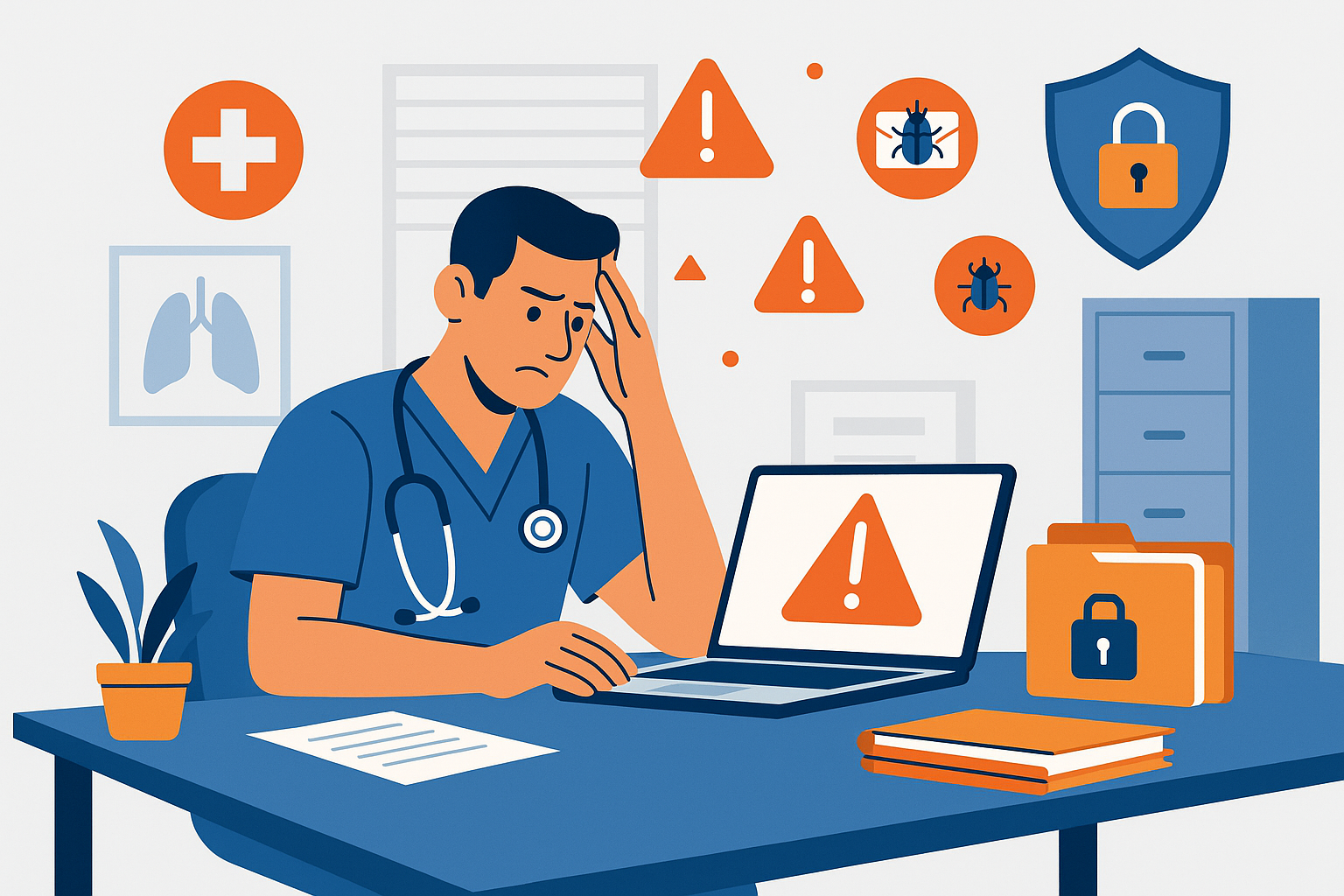
Patient Care at Risk: Why Healthcare Offices Can’t Afford to Ignore IT Vulnerabilities
Running a healthcare practice today means balancing patient care with compliance, billing, scheduling, and a growing mountain of digital data. But as medical offices grow more connected, they also become more exposed.
Unfortunately, many healthcare offices—especially smaller ones—still operate with outdated systems, minimal security protocols, and ad-hoc IT support. And that’s not just inefficient… it’s dangerous.
This article unpacks the hidden IT pain points healthcare practices face, why resolving them is mission-critical, the risk of inaction, steps you can take today, and how KairosMSP can help keep your practice secure, compliant, and running smoothly.
⸻
The Pain Point: Outdated, Unsecured, and Overlooked IT Systems
In many healthcare offices, IT is treated as a necessary evil. The front desk juggles EMR glitches between appointments, someone’s cousin “who’s good with computers” helps when things crash, and backups? They’re on a dusty hard drive from two years ago.
Sound familiar?
Common Pain Points in Healthcare Offices:
• Old computers or unpatched software vulnerable to breaches
• Insecure patient portals or file storage
• Frequent downtime in practice management or EHR systems
• No reliable data backup or disaster recovery plan
• Weak Wi-Fi or open networks putting PHI at risk
• HIPAA violations waiting to happen
The result is a digital house of cards—one power outage, malware infection, or compliance audit away from disaster.
⸻
Why It’s Critical to Resolve Now
Healthcare professionals are bound by strict HIPAA regulations and patient trust. One lapse in your technology setup could result in fines, lawsuits, or even the shutdown of your practice.
Just one breach could mean:
• Up to $50,000 per HIPAA violation (and up to $1.5M annually)
• Loss of patient trust and referrals
• Legal action or class lawsuits
• Public damage to your reputation
• Disruption of care delivery
If your EHR goes down during business hours or patient data is leaked, it’s not just an IT problem—it’s a healthcare crisis.
⸻
The Risk of Inaction: A Ticking Time Bomb
Many healthcare offices think: “We’re small, why would anyone target us?”
But the reality is: small practices are targeted more often because they’re easier to exploit.
Cybercriminals use automated tools to find vulnerable systems. That means if your router hasn’t been updated since 2017 or your antivirus is expired, you’re already on someone’s radar.
What’s at risk if you wait:
• Ransomware attacks locking down access to all patient data
• Loss of billing or appointment records
• Audits that uncover non-compliance
• Compromised patient portals or email systems
• Costly downtime that backs up appointments and billing cycles
Healthcare IT isn’t just about keeping the lights on. It’s about protecting your patients, your license, and your livelihood.
⸻
Action Steps You Can Take Right Now
1. Get a HIPAA-Focused IT Risk Assessment
Know where your vulnerabilities are. Look at endpoints, backups, encryption, access controls, and audit logs.
2. Enforce Strong Access Controls
Make sure only the right people have access to patient data. Use unique logins, MFA, and audit trails.
3. Encrypt Everything—In Transit and At Rest
Data moving between systems (and stored) must be encrypted to meet HIPAA standards.
4. Automate Backups and Test Recovery Regularly
You must be able to recover patient data quickly in the event of a failure, breach, or disaster.
5. Train Staff on Phishing and Security Hygiene
Employees are the #1 risk in healthcare IT breaches. Ongoing training reduces this dramatically.
⸻
How KairosMSP Helps Healthcare Offices Stay Compliant, Secure, and Operational
KairosMSP provides turnkey managed IT services tailored to the unique needs of healthcare offices. Whether you’re a solo chiropractor or a growing family medical clinic, we keep your technology compliant, your data secure, and your operations running at full speed.
What We Offer Healthcare Clients:
• 24/7 Monitoring & Threat Response
• Secure Encrypted Backups
• End-to-End Device Management
• Onsite & Remote Support
• Staff Security Training & Risk Assessments
• Business Continuity & Disaster Recovery Planning
We help you focus on your patients, not your IT problems.
⸻
Take Action: Avoid Fines, Downtime, and Risk
Every day you wait increases the chance of a preventable breach, outage, or audit failure. If you’re still relying on break-fix IT or doing it all in-house, it’s time to protect what matters most—your patients and your practice.
Schedule your free healthcare IT consultation with KairosMSP today.
We’ll assess your vulnerabilities, create a tailored compliance roadmap, and get your technology working as hard as you do.
⸻
KairosMSP – Right Technology. Right Time. Right People.
The Silent Threat in Your Law Office: Why Ignoring IT Risks Could Cost More Than Just Your Case
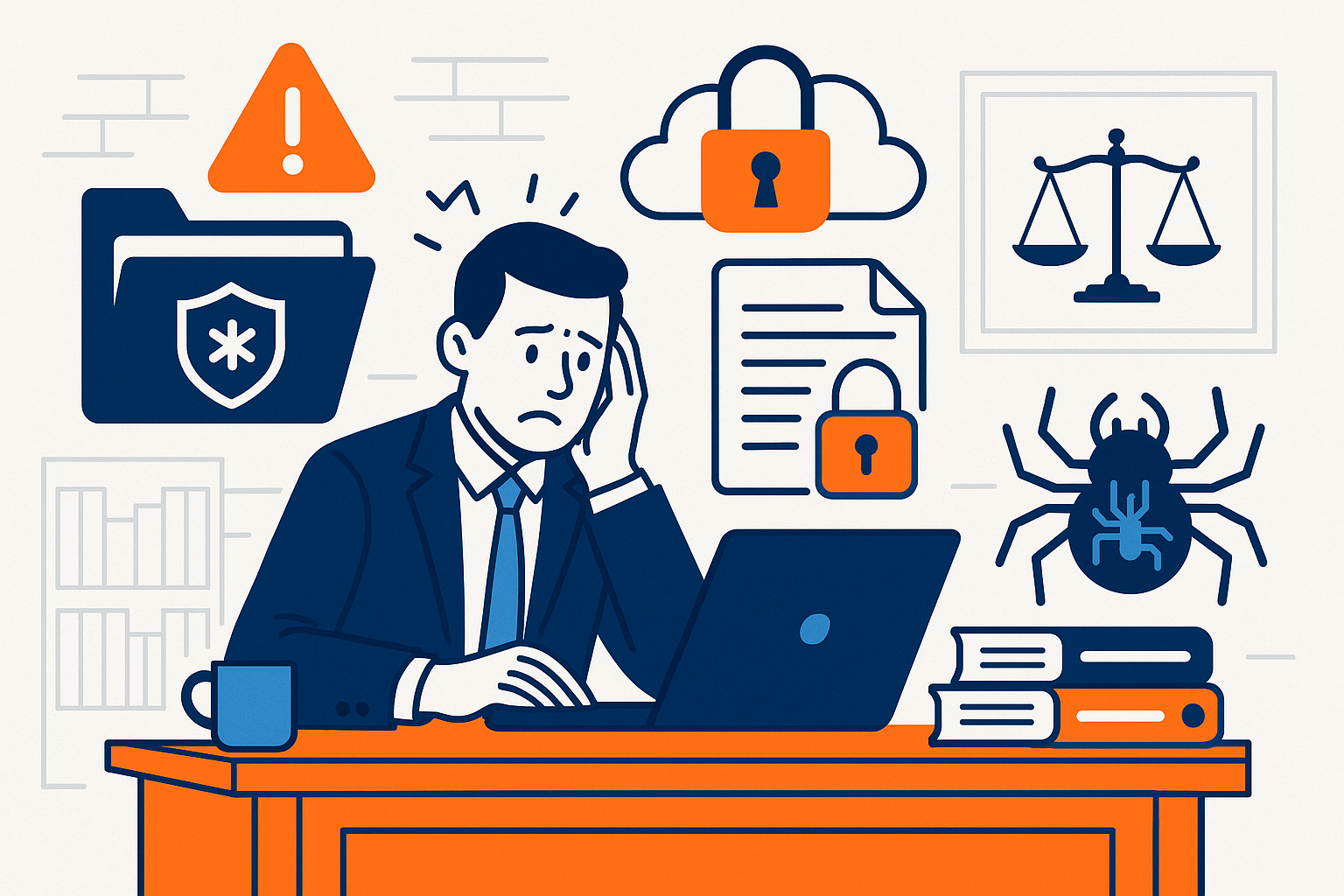
The Silent Threat in Your Law Office: Why Ignoring IT Risks Could Cost More Than Just Your Case
In the legal profession, credibility and confidentiality are everything. Your clients entrust you with sensitive personal information, proprietary business data, and legal strategies that, if compromised, could derail not just a case—but your entire firm. Yet, despite the high stakes, many law offices rely on outdated, reactive IT strategies or internal staff to “manage” their technology. The result? Gaping vulnerabilities that could lead to data breaches, lost productivity, compliance violations, and reputational damage.
This article dives into a crucial pain point many law firms overlook: a lack of proactive IT infrastructure and cybersecurity measures—and why solving it isn’t optional, but essential.
The Real Pain Point: Reactive IT = Legal Liability
Most small to mid-sized law offices operate under tight margins. It’s tempting to view IT support as an afterthought—something you only need when a computer crashes, or an email stops working. But IT isn’t just about fixing problems after they happen; it’s about preventing those problems in the first place.
Common IT Issues in Law Firms:
- Outdated systems vulnerable to exploits
- Insecure document storage or file sharing
- No formal disaster recovery or backup plan
- Unencrypted client communications
- Lack of user training on phishing and social engineering threats
These issues often lurk beneath the surface until it’s too late. And in law, the cost of downtime or a data breach goes far beyond dollars and cents.
Why It Matters: Your Reputation Is on the Line
The legal industry is one of the most targeted sectors for cyberattacks—precisely because of the sensitive data you handle. One ransomware attack or exposed client file can lead to malpractice claims, ethics violations, and permanent loss of trust.
In 2023 alone, the ABA reported that over 29% of law firms experienced a security breach, yet fewer than half had a formal incident response plan in place.
If that doesn’t concern you, consider this:
- Compliance violations (ABA Model Rules, HIPAA, GDPR) can result in fines and sanctions.
- Data loss could mean losing access to court filings, evidence, or client records.
- Downtime during a breach or system failure could delay filings or hearings, jeopardizing your case and client outcomes.
- Reputation loss is often irreversible—especially in tight-knit legal communities.
The Cost of Doing Nothing: A Lawsuit Waiting to Happen
Let’s say you don’t prioritize IT security. What’s the worst that could happen?
- Your client database gets locked down by ransomware during a trial.
- An untrained staff member clicks on a phishing email and compromises attorney-client privilege.
- A partner opens a file from unsecured public Wi-Fi, exposing sensitive financial documents.
Suddenly, your law firm becomes the case study—not the counsel.
Action Steps: What Every Law Firm Should Be Doing Right Now
Here’s what proactive, security-minded law offices are doing—and what you should do, too:
1. Conduct an IT Security Audit
Assess your current environment. Are your systems patched? Are files backed up? Is remote access secure?
2. Implement Data Encryption and Secure File Sharing
All data—especially in transit—should be encrypted. Ditch Dropbox and use legal-specific tools for document management.
3. Establish a Regular Backup and Recovery Plan
Use automated, offsite backups with versioning. Make sure you can restore quickly in the event of a ransomware attack.
4. Train Your Staff on Cybersecurity Hygiene
Phishing is still the #1 entry point for attackers. Make security awareness part of your firm’s culture.
5. Create a Written IT Incident Response Plan
Know exactly what to do—and who to call—when disaster strikes.
How KairosMSP Protects Your Firm Like It’s Our Own
At KairosMSP, we understand the unique pressures law offices face. We’re more than a help desk—we’re your technology partner in protecting clients, preserving uptime, and powering growth.
Here’s what we do for law firms:
- 24/7 Monitoring & Threat Detection – Stop threats before they spread.
- Automated Patch Management & Updates – Stay secure without interrupting your workflow.
- Secure Remote Access for Attorneys – Work from court, home, or office with zero compromise.
- Encrypted File Sharing & Storage – Legal-grade document management.
- Disaster Recovery Solutions – So your data—and your reputation—never go down with the ship.
- Compliance & Audit Readiness – We help you meet ABA, HIPAA, and other regulatory standards.
Your Next Step: Don’t Wait for a Breach
Cyber threats, compliance requirements, and client expectations are only getting more complex. Don’t wait for a disaster to realize your law firm is vulnerable.
Contact KairosMSP today for a free risk assessment and IT consultation. We’ll help you find and fix the gaps before they become lawsuits.
KairosMSP: Right Technology. Right Time. Right People.